
Tax Consultants in Dubai | UAE Tax Accounting Agents
How Proper Accounting Helps Businesses Make Better Financial Decisions
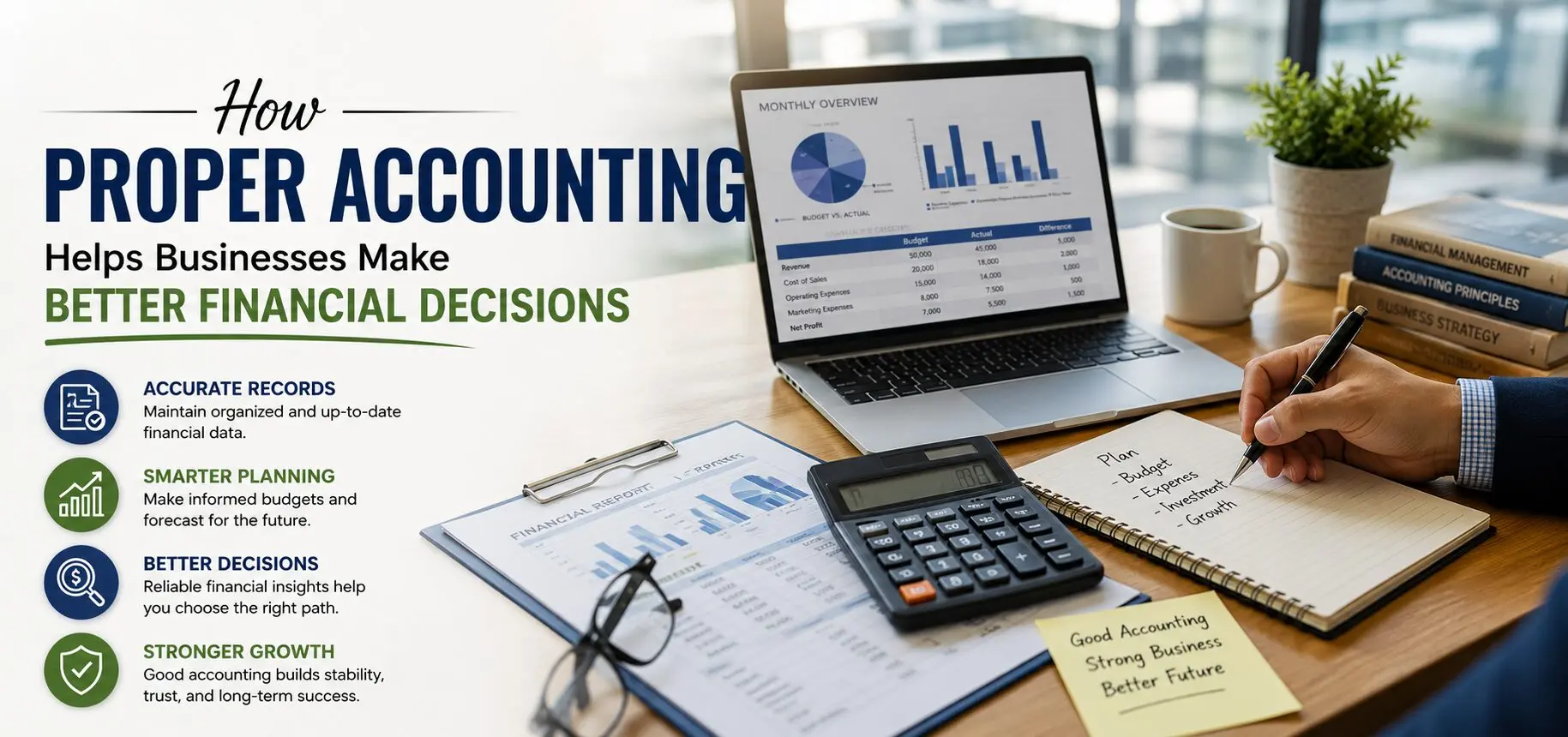
Introduction: Why Accounting Is Important for Business Decision Making
Every successful business depends on accurate financial information to make smart and strategic decisions. Whether a company is a startup, a small business, or a large enterprise, understanding its financial position is essential for planning growth, controlling expenses, and ensuring long-term stability.
Proper accounting is the foundation of strong financial management. It helps businesses maintain organized financial records, track income and expenses, and understand their overall financial performance. When financial information is accurate and well-structured, business owners and managers can make informed decisions that support sustainable growth.
Many organizations underestimate the importance of accounting in business decision making. However, without reliable financial records, companies may struggle to control costs, manage cash flow, or plan future investments effectively.
This article explains how proper accounting helps businesses make better financial decisions, why accurate financial records are essential for organizations, and how accounting supports long-term business success.
The Role of Accounting in Business Management and Financial Planning
Accounting is often referred to as the language of business because it communicates financial information that helps leaders understand how a company is performing.
Every financial transaction within a business—such as sales, purchases, expenses, and investments—is recorded through accounting systems. These records are then used to prepare financial reports that provide insights into the company’s financial health.
The most common accounting reports used for business decision making include:
- Income Statements – showing revenue, expenses, and profits
- Balance Sheets – presenting assets, liabilities, and equity
- Cash Flow Statements – tracking money entering and leaving the business
- Financial Performance Reports—summarizing overall financial activity
These reports allow business owners and managers to evaluate financial performance and determine whether the company is profitable, financially stable, and prepared for future growth.
Without proper accounting systems, businesses would have difficulty understanding their financial position and making strategic decisions.
How Proper Accounting Improves Financial Visibility in Business
One of the biggest benefits of proper accounting for business growth is clear financial visibility.
When financial transactions are recorded accurately and consistently, businesses gain a complete overview of their financial condition. This includes information about revenue, expenses, liabilities, and available resources.
Accurate accounting allows companies to monitor:
- Total revenue generated during a specific period
- Operational and administrative expenses
- Profit margins and financial performance
- Outstanding debts and liabilities
- Available business assets and financial resources
This level of financial clarity helps organizations understand where their money is being generated and where it is being spent.
The Importance of Accounting in Strategic Business Planning
Strategic planning is essential for businesses that aim to grow and remain competitive. Accounting plays a key role in this process by providing reliable financial data that supports business planning and forecasting.
When companies maintain structured accounting records, they can analyze historical financial performance and use that information to plan future strategies.
Accounting helps businesses in strategic planning by enabling them to:
- Set realistic financial goals
- Allocate resources efficiently
- Evaluate investment opportunities
- Forecast future revenue and expenses
- Plan business expansion strategies
Using accurate financial data reduces uncertainty and allows businesses to make decisions based on measurable insights instead of assumptions.
As a result, accounting becomes a powerful tool for long-term business planning and financial decision-making.
How Accounting Helps Businesses Manage Cash Flow Effectively
Cash flow management is one of the most critical factors for business success. Even profitable businesses can experience financial difficulties if they fail to manage cash flow properly.
Accounting systems help organizations track the movement of money into and out of the business. This provides a clear understanding of how funds are being used and whether sufficient cash is available for operational needs.
Through proper accounting practices, businesses can monitor:
- Payments received from customers
- Payments made to suppliers and vendors
- Operational expenses and salaries
- Loan repayments and financial obligations
Accurate financial records allow businesses to anticipate cash shortages, plan expenses more effectively, and ensure that financial obligations are met on time.
Effective cash flow management supported by accounting systems reduces financial stress and supports business stability.
The Role of Accounting in Budgeting and Expense Control
Budgeting is another important aspect of financial management that relies heavily on proper accounting.
A well-planned budget helps businesses control spending, allocate financial resources effectively, and maintain profitability. Accounting provides the financial data required to create accurate and realistic budgets.
By analyzing financial records, businesses can identify:
- Major categories of business expenses
- Areas where spending can be reduced
- Patterns in operational costs
- Opportunities for improving financial efficiency
Once a budget is established, accounting systems allow companies to compare actual expenses with planned budgets. This helps identify deviations and enables management to make timely financial adjustments.
Effective budgeting supported by accurate accounting leads to better financial control and improved profitability.
How Accounting Helps Identify Financial Risks Early
Every business faces financial risks, including rising operational costs, declining revenue, or unexpected financial challenges. Proper accounting helps organizations identify these risks at an early stage.
When financial data is recorded and reviewed regularly, businesses can detect warning signs such as:
- Increasing operational expenses
- Declining profit margins
- Delayed customer payments
- Excessive spending in specific departments
Early detection allows businesses to take corrective actions before financial problems become more serious.
This proactive financial management approach helps companies maintain stability and reduce long-term risks.
How Financial Reports Support Better Business Decisions
By analyzing financial reports, managers and business owners can evaluate key financial indicators and assess whether the business is performing as expected.
For example:
Income Statement
Provides a detailed overview of revenue, expenses, and profitability.
Balance Sheet
Shows the financial position of the business by presenting assets, liabilities, and equity.
Cash Flow Statement
Tracks how cash moves through the business, helping management understand liquidity and financial sustainability.
These reports help business leaders determine:
- Whether the company is profitable
- Whether operational resources are being used efficiently
- Whether investments are generating expected returns
- Whether financial adjustments are necessary
Access to reliable financial data allows businesses to make confident and informed decisions.
Why Financial Transparency Is Important for Businesses
Financial transparency plays a crucial role in building trust with stakeholders such as investors, lenders, and business partners.
Proper accounting ensures that financial records are accurate, organized, and accessible when required. Transparent financial reporting demonstrates accountability and strengthens a company’s credibility.
This transparency becomes especially important when businesses seek:
- External investment opportunities
- Bank loans or financial funding
- Strategic partnerships with other organizations
Companies that maintain transparent accounting practices are often viewed as more reliable and professionally managed.
How Proper Accounting Supports Business Growth and Expansion
Business expansion requires careful financial planning and evaluation. Before investing in new opportunities or expanding operations, companies must analyze whether they have the financial capacity to support growth.
Accounting provides the financial insights necessary to answer important questions such as:
- Is the company financially stable enough for expansion?
- Can the business afford new investments?
- Will the investment generate profitable returns?
By analyzing financial reports and performance trends, businesses can make strategic growth decisions with greater confidence.
Conclusion: The Importance of Proper Accounting for Sustainable Business Success
Proper accounting is an essential component of effective business management. It provides businesses with accurate financial information, organized records, and valuable insights that support informed decision making
Through proper accounting practices, organizations can monitor financial performance, manage cash flow, control expenses, identify risks, and plan future growth strategies.
Businesses that prioritize accurate financial record keeping are better prepared to respond to challenges and take advantage of new opportunities.
For organizations seeking sustainable success, proper accounting is not only a financial requirement—it is a strategic foundation for better business decisions and long-term growth.
